
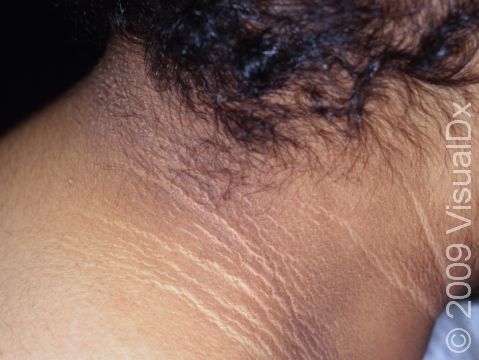
Acanthosis Nigricans
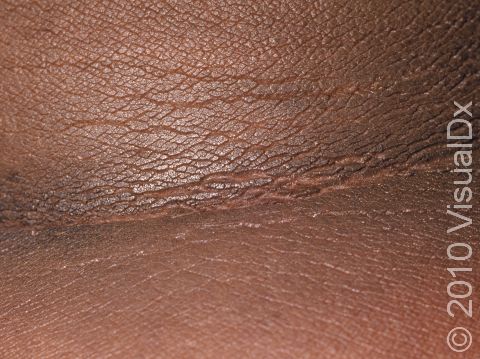
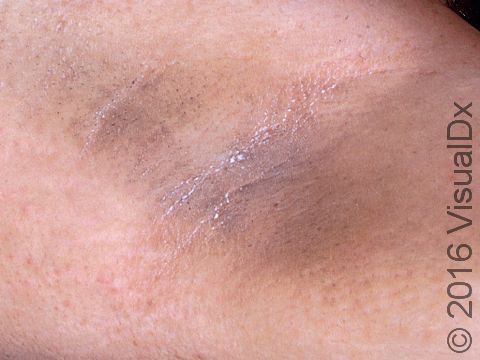
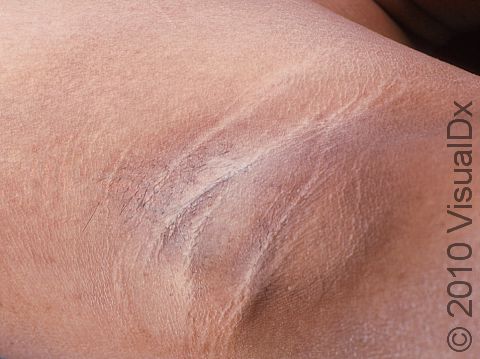
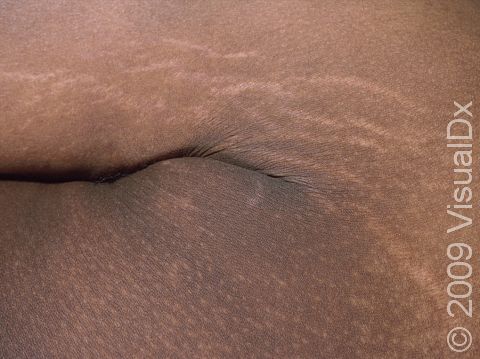
Acanthosis nigricans is a skin condition that causes thickening and darkening of the skin, especially in body creases, such as the underarms, groin, and neck. Its cause is unknown, but it may be associated with obesity, certain cancers, diabetes, and certain medications, or in some cases it may be familial. Treatment of any underlying medical condition, if present, usually resolves the skin lesions.
Who's At Risk?
Acanthosis nigricans can affect individuals of any age, including children and those of any racial / ethnic background. However, it is most common in adults. Males and females are affected equally.
Groups of people who commonly develop acanthosis nigricans include:
- Those who are overweight or obese.
- People with endocrine (glandular) abnormalities, such as diabetes.
- People taking certain medications, such as oral contraceptives, niacinamide, or corticosteroids.
- Those who have had a kidney transplant.
- People with an internal malignancy, especially stomach cancer (a very rare cause of acanthosis nigricans).
Signs & Symptoms
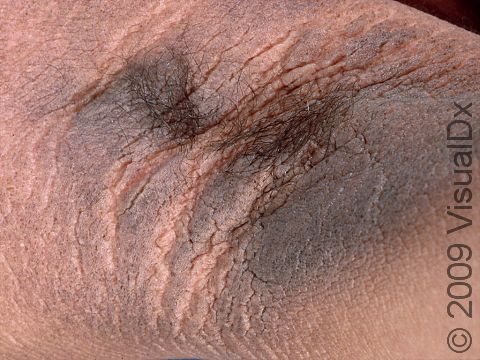
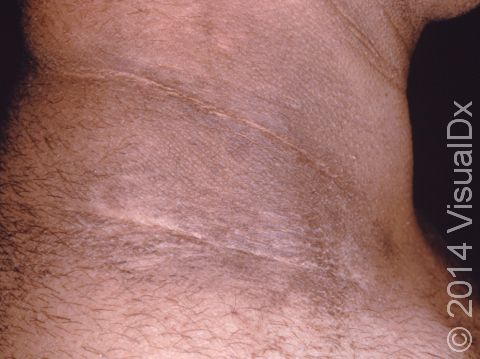
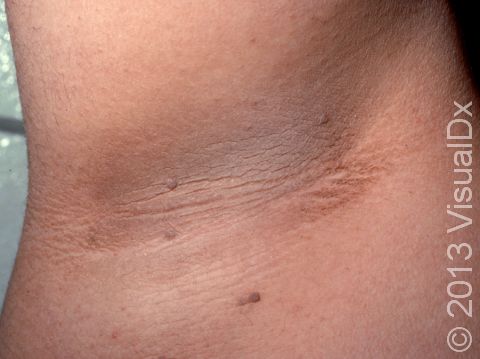
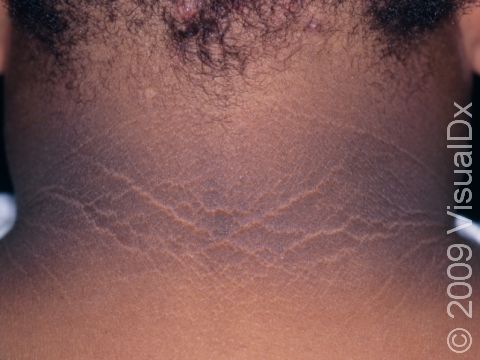
Acanthosis nigricans appears as “velvety,” thickened plaques (slightly raised areas that are larger than a thumbnail). They can range in color from gray to brown to black, and they are often darkest in individuals with darker skin colors. The affected areas may also develop skin tags (acrochordons). The affected areas may be itchy.
The most common locations for acanthosis nigricans include the:
- Sides and back of the neck.
- Underarms.
- Groin.
Less commonly, acanthosis nigricans can affect the:
- Face.
- Inner thighs.
- Elbows.
- Knees.
- Belly button.
Very rarely, acanthosis nigricans can be found in the:
- Nipples and breasts.
- Eyelids.
- Lips.
- Inside the mouth.
- Anus.
If acanthosis nigricans develops from an internal malignancy, weight loss and other related symptoms may be present.
Self-Care Guidelines
In individuals with acanthosis nigricans who are overweight, losing the extra weight, such as with dietary changes and exercise, can potentially cure or help dramatically improve the appearance of the condition.
The following over-the-counter treatments may also help:
- Preparations containing alpha hydroxy acids, such as glycolic acid or lactic acid (eg, AmLactin Daily Moisturizing Therapy)
- Lotions containing salicylic acid (eg, CeraVe SA Cream)
- Creams containing urea (eg, Ureacin-20 Moisturizing Cream)
- Cortisone cream if the areas are itchy
Treatments
Your medical professional will want to first establish the underlying cause of the acanthosis nigricans. If it is due to obesity, then assistance with weight loss may be advised. If obesity is not a factor, they may try to determine the underlying cause by ordering blood work or other diagnostic tests. If the acanthosis nigricans is caused by a medication, your medical professional may be able to prescribe a substitute medication.
Once any underlying medical condition has been established and is being treated, your medical professional may recommend a topical cream or lotion for the acanthosis nigricans containing:
- Alpha or beta hydroxy acids (glycolic acid, lactic acid, salicylic acid), or urea.
- A retinoid such as tretinoin, tazarotene, or adapalene with or without ammonium lactate lotion or cream.
For more severe, stubborn acanthosis nigricans, treatments that may be recommended include:
- Isotretinoin, metformin, or rosiglitazone.
- Lasers that thin the skin by destroying the uppermost layers.
- Peels (eg, trichloroacetic acid).
Visit Urgency
If you notice thickening and darkening of the skin folds, see your medical professional for advice. If the acanthosis nigricans is due to obesity, a medical professional can help you develop healthy strategies to attain your weight goals.
If you develop sudden or widespread acanthosis nigricans (involving the skin folds as well as the palms of the hands, the lips, and other less typical areas) or if you have acanthosis nigricans and are losing weight without trying, you should see your medical professional promptly to make sure here is no underlying serious medical condition, such as malignancy.
Trusted Links
References
Bolognia J, Schaffer JV, Cerroni L. Dermatology. 4th ed. Philadelphia, PA: Elsevier; 2018.
James WD, Elston D, Treat JR, Rosenbach MA. Andrew’s Diseases of the Skin. 13th ed. Philadelphia, PA: Elsevier; 2019.
Kang S, Amagai M, Bruckner AL, et al. Fitzpatrick’s Dermatology. 9th ed. New York, NY: McGraw-Hill Education; 2019.
Last modified on July 13th, 2023 at 6:14 pm
Not sure what to look for?
Try our new Rash and Skin Condition Finder