
Acne Excoriée
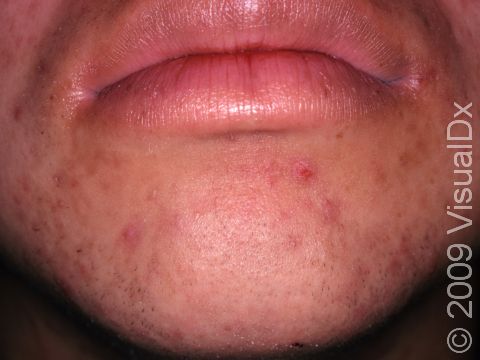
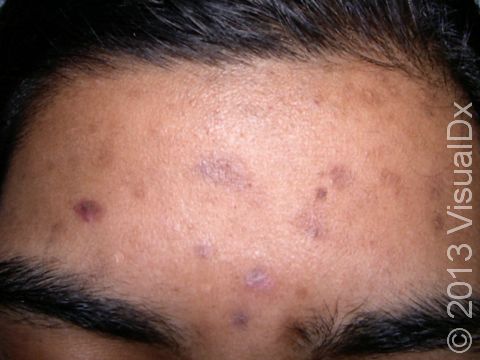
Acne excoriée, also known as “picker’s acne,” results when acne lesions are repeatedly picked, scratched, or rubbed, resulting in scabs and scars. It is seen most commonly in adolescent girls and young women, and it is sometimes associated with mental health disorders such as anxiety, depression, and obsessive-compulsive disorder.
Acne, also known as acne vulgaris, is a common skin condition. Acne can result in permanent scarring, particularly when picked or scratched, so minimizing breakouts is important.
In acne excoriée, it is important not only to treat the acne but also the cause of the compulsive picking.
Who's At Risk?
Acne vulgaris is very common, affecting most people at some point in their lives. Acne excoriée is most common in teen girls and young women.
Signs & Symptoms
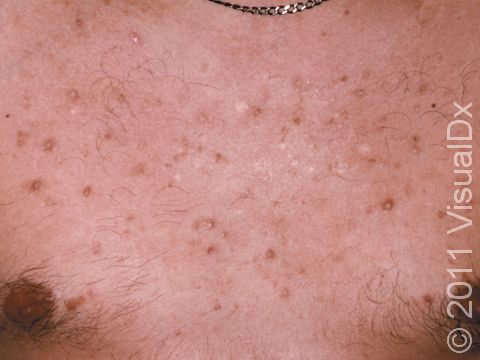
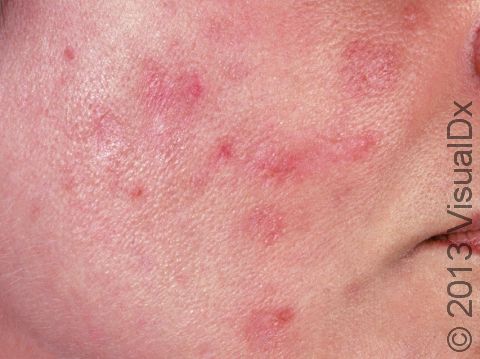
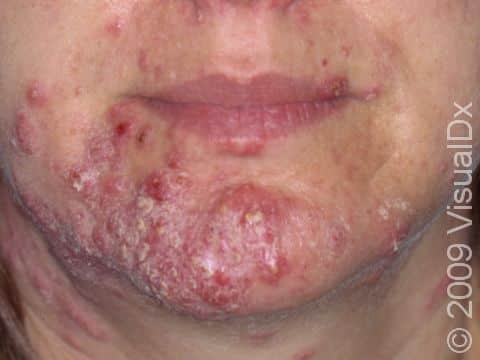
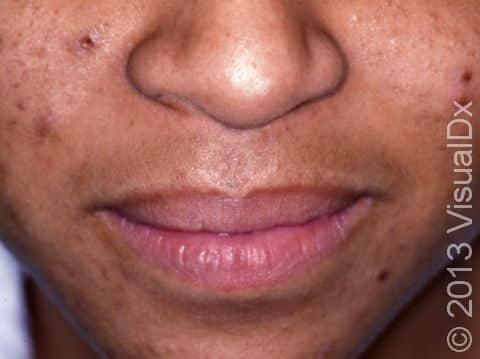
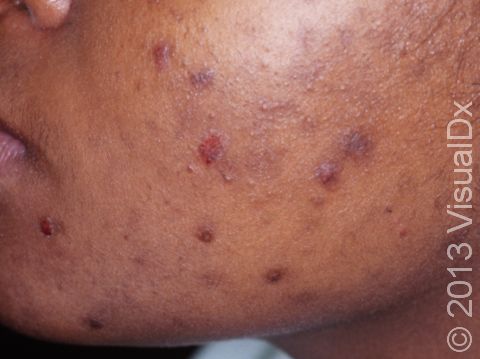
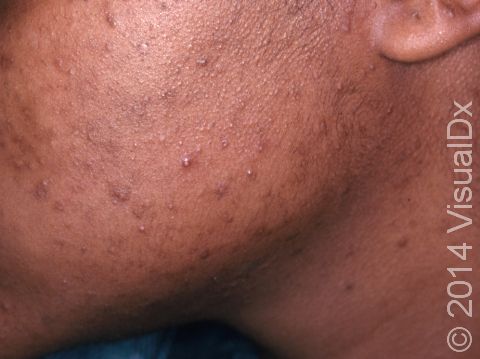
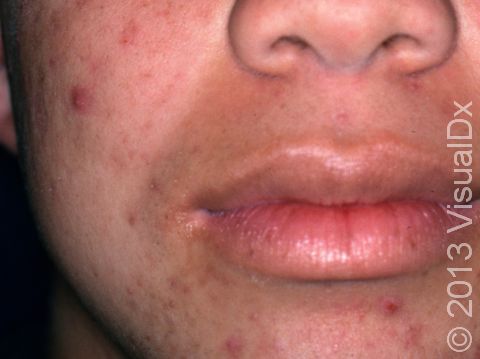
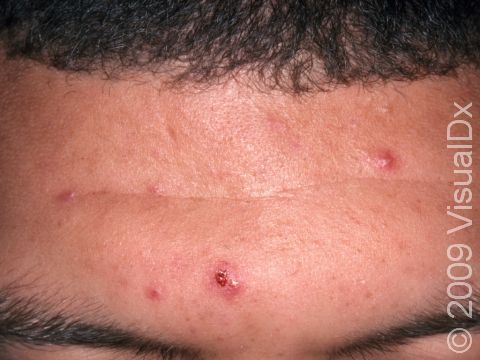
The most common acne locations include the face, neck, chest, and back, where the most sebaceous glands are located. In acne excoriée, the underlying acne is usually mild, with some papules (smooth, solid bumps) or pustules (pus-filled bumps). Picking these papules and pustules then results in scabs, shallow sores, and permanent scars, which can either appear as depressions in the skin or as hyperpigmentation, which is dark red or brown, flat marks where the acne lesions were. This skin color change may be more pronounced or last longer in darker skin colors.
The habit of picking at the skin may persist long after the acne has improved.
Self-Care Guidelines
Almost all acne can be improved by simple measures and treatments. Cleanse the acne-prone areas with gentle soaps or cleansers, and avoid irritants, such as rubbing and other alcohols, and abrasive scrubs and greasy products on the skin and in the scalp (as this may spread to the face). Products labeled “water-based” or “noncomedogenic” will help reduce clogged pores. Keep your hair, hands, and devices such as cell phones off your face.
There are a variety of over-the-counter medications that may help. These are meant to be preventive therapies and should be applied in a thin layer to the entire area on a regular basis. If applied consistently, you may see small improvements quickly, but results are generally seen after a few months. Benzoyl peroxide (the most effective over-the-counter medication) is available in a variety of formulations (such as washes, gels, and creams) and strengths. Benzoyl peroxide tends to dry the skin, though, so if you have dry skin, use a weaker-concentration product; for oily skin, consider higher strengths. Be aware that benzoyl peroxide can bleach your clothing and towels. Peeling agents (exfoliants) such as salicylic acid, sulfur, and alpha-hydroxy acids (such as glycolic acid) can help but will cause some dryness of the skin as well.
Be mindful of what emotions cause you to want to pick, and try to address these. Devices such as HabitAware may provide help to alert you to your triggers and help you stop picking. Behavioral therapy or counseling can also be helpful.
Treatments
In acne excoriée, it is important to treat the underlying acne. Topical treatments for acne include one or more creams, washes, or gels, such as antibacterial agents, retinoids, or benzoyl peroxide. For more severe acne, oral antibiotics, oral contraceptives and spironolactone, and isotretinoin may be needed.
To help treat any anxiety, depression, or another underlying mental health condition, your medical professional may provide a referral to a mental health professional. N-acetylcysteine may be helpful, and your medical professional may also recommend this treatment. Sometimes antianxiety or antidepressant medication may be prescribed.
To treat hyperpigmentation, retinoids and benzoyl peroxide can speed up the process of lightening the affected areas. Other products include topical hydroquinone, azelaic acid (10%-20%), glycolic acid, and kojic acid, and procedures such as microdermabrasion and light chemical peels can also be helpful.
To help reduce the prominence of old acne scars, your medical professional can discuss laser resurfacing, plastic surgery, and/or dermabrasion options.
Visit Urgency
Seek professional care if you have acne excoriée that is not improved with self-care. Also speak with your medical professional if you have any feelings of depression or anxiety.
References
Bolognia J, Schaffer JV, Cerroni L. Dermatology. 4th ed. Philadelphia, PA: Elsevier; 2018.
James WD, Elston D, Treat JR, Rosenbach MA. Andrew’s Diseases of the Skin. 13th ed. Philadelphia, PA: Elsevier; 2019.
Kang S, Amagai M, Bruckner AL, et al. Fitzpatrick’s Dermatology. 9th ed. New York, NY: McGraw-Hill Education; 2019.
Last modified on June 25th, 2026 at 10:29 am
Not sure what to look for?
Try our new Rash and Skin Condition Finder