
Cherry Hemangioma
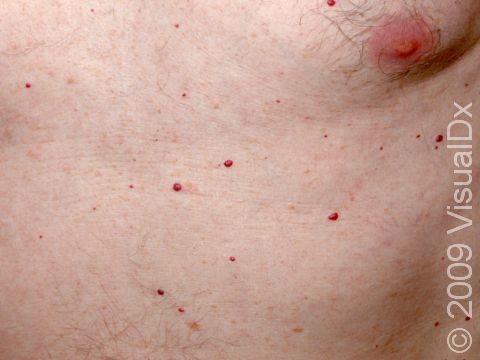
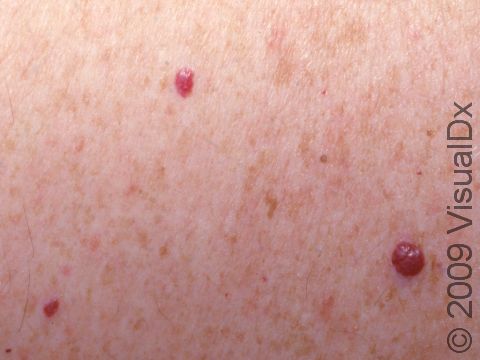
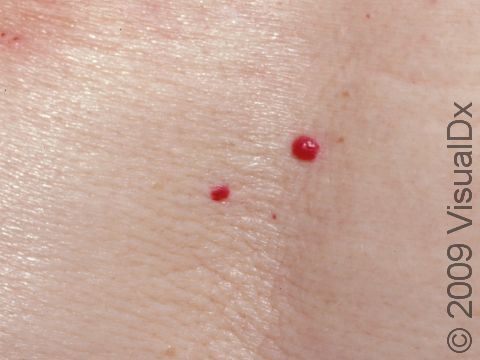
A cherry hemangioma is a small macule (small, flat, smooth area) or papule (small, solid bump) formed from an overgrowth of tiny blood vessels in the skin. Cherry hemangiomas are characteristically red or purplish in color. They often first appear in middle adulthood and usually increase in number with age. Cherry hemangiomas are noncancerous (benign) and are common in adults.
Who's At Risk?
Cherry hemangiomas are found in individuals of all races / ethnicities and sexes. They occur more frequently with increasing age.
Signs & Symptoms
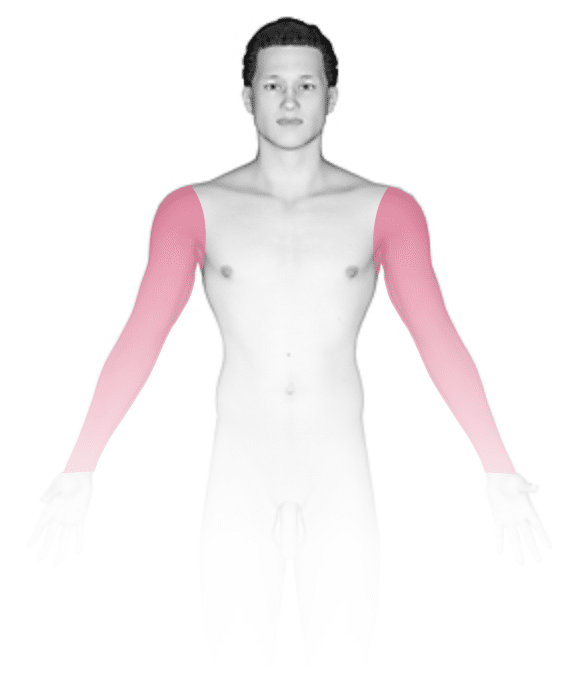
Cherry hemangiomas may be found on any body location, but they are most commonly found on the trunk and arms and legs. They range from tiny macules to larger, round-topped papules (2-10 mm). They are often red but are sometimes more purple than red in color. Rarely, a cherry hemangioma may be dark brown or almost black color.
Self-Care Guidelines
Try to avoid trauma to the lesion(s), which may cause irritation and bleeding of the area.
Treatments
If cosmetically bothersome or if they cause irritation or bleeding, cherry hemangiomas may be removed by cutting away the area (excision), burning away the area (electrocautery), freezing the area (cryosurgery), or via laser therapy.
Visit Urgency
Cherry hemangiomas do not typically require treatment, although lesions that are irritated or bleeding (most commonly occurring due to injury) may require removal. Cherry hemangiomas can also be removed if they are cosmetically bothersome. If a new lesion appears on the skin that is dark brown or black, seek medical care to rule out melanoma (skin cancer). Additionally, if a red or purple spot is growing or painful, it should be evaluated by a medical professional.
Trusted Links
References
Bolognia J, Schaffer JV, Cerroni L. Dermatology. 4th ed. Philadelphia, PA: Elsevier; 2018.
James WD, Elston D, Treat JR, Rosenbach MA. Andrew’s Diseases of the Skin. 13th ed. Philadelphia, PA: Elsevier; 2019.
Kang S, Amagai M, Bruckner AL, et al. Fitzpatrick’s Dermatology. 9th ed. New York, NY: McGraw-Hill Education; 2019.
Last modified on June 14th, 2024 at 1:17 pm
Not sure what to look for?
Try our new Rash and Skin Condition Finder