
Nail Infection (Paronychia)
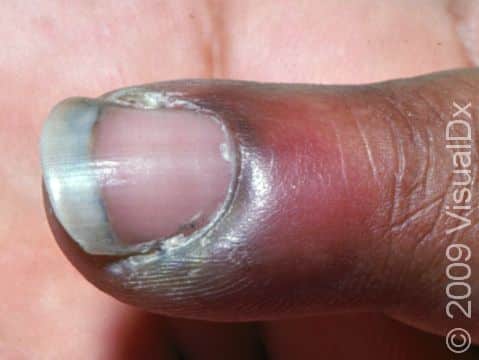
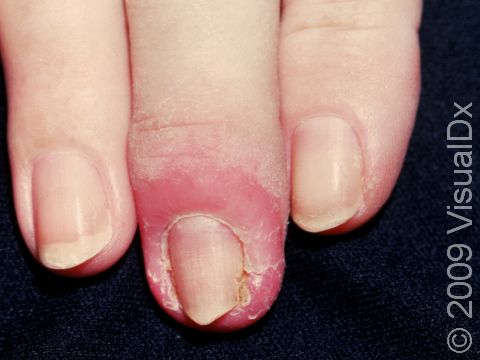
Paronychia, commonly called a nail fold infection, is inflammation of the region of the finger or toe next to the nail, either at the proximal nail fold (the base of the nail) or at the lateral nail fold (on either side of the nail). Paronychia is usually the result of a bacterial infection but can be caused by a virus, typically the herpes simplex virus. It can also be caused by certain medications, such as retinoids. The inflammation may occur in the short term (acute paronychia), or it may be a long-term problem (6 weeks or longer) or one that keeps coming back (chronic paronychia).
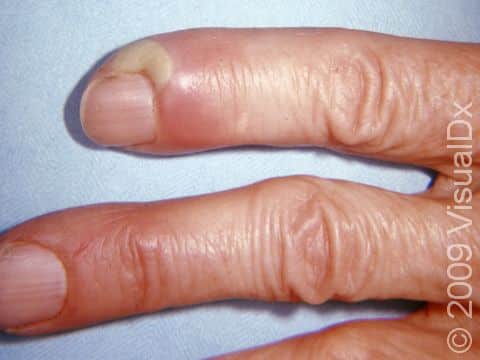
In the case of acute paronychia, there is typically some sort of trauma to the nail fold (eg, a splinter, removing the cuticle during a manicure or pedicure, fingernail biting, tearing away a hangnail) that allows bacteria to enter, resulting in infection.
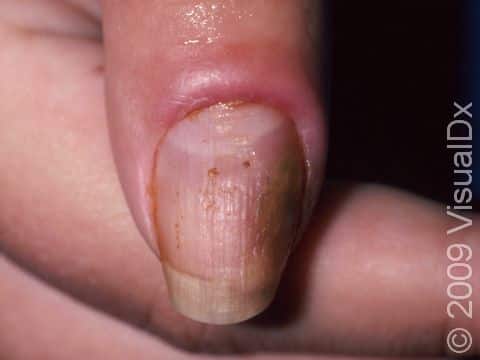
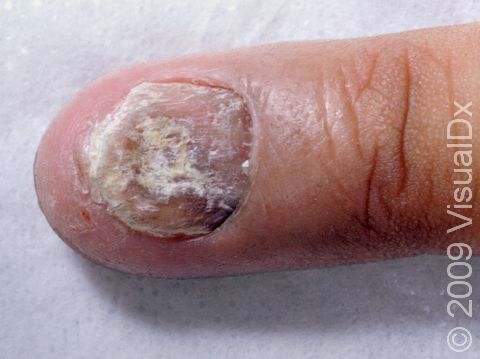
Chronic paronychia occurs most often in people whose hands are commonly exposed to moisture. This leads to irritation of the nailfolds that is then complicated by fungal overgrowth, often due to a type of yeast called Candida. Chronic paronychia causes swollen, reddish nailfolds and can also lead to abnormal nail growth.
Who's At Risk?
Acute paronychia may occur at any age, but it is particularly common in children, especially in those who suck their fingers or thumb.
Chronic paronychia is most common in adult women and in people whose hands are kept continually wet, such as dishwashers, bartenders, laundry workers, nurses, swimmers, fishers, and people who work as food handlers. It is also more common in people who have diabetes and those who have a lowered immune system.
Signs & Symptoms
Paronychia most often affects the proximal or lateral nail fold of the thumb or fingers, as well as the toes.
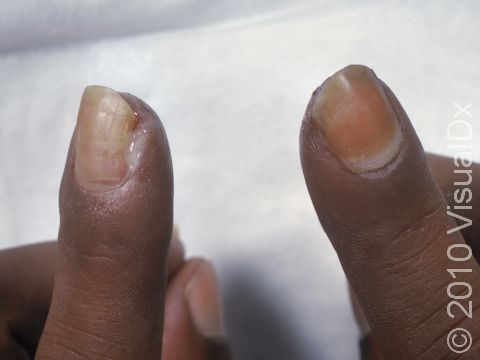
In acute paronychia, the affected nail fold may be red, swollen, painful, and there may be an abscess (a tender bump containing pus). Usually only one nail is affected.
In chronic paronychia, the affected nail fold can be swollen, red, and have a damaged or missing cuticle. One or more nails may be affected. Additionally, there may be changes to the nails themselves, including pitting of the nails, horizontal lines on the nail plate (called Beau lines), or lifting of the nail from the nail bed (called onycholysis). There may also be brownish discoloration on the sides of the nails.
Self-Care Guidelines
For acute paronychia, try soaking the nails in warm water 4 times daily for 15 minutes until the symptoms resolve, gently pressing on the affected area in the direction of the nail to help encourage any pus to drain. You can also apply an antibacterial ointment (eg, Neosporin or triple antibiotic containing neomycin, polymyxin B, and bacitracin) to the affected area 2-3 times a day.
For chronic paronychia, try to avoid excessive water exposure and chemical exposure. People who cannot avoid such exposures, such as dishwashers, should wear rubber gloves with cotton liner inserts. Also avoid injury to the nail fold, including manicuring and using artificial nails.
Treatments
For acute paronychia, your medical professional may:
- Puncture and drain the affected area and test for bacteria.
- Prescribe a topical antibiotic or oral antibiotic.
For chronic paronychia, your medical professional may:
- Prescribe a topical steroid.
- Prescribe a topical antifungal medication.
- Administer a steroid injection.
Visit Urgency
See your medical professional if you notice signs of a bacterial nail infection, such as a red, swollen, painful nail fold that may contain pus.
Trusted Links
References
Bolognia J, Schaffer JV, Cerroni L. Dermatology. 4th ed. Philadelphia, PA: Elsevier; 2018.
James WD, Elston D, Treat JR, Rosenbach MA. Andrew’s Diseases of the Skin. 13th ed. Philadelphia, PA: Elsevier; 2019.
Kang S, Amagai M, Bruckner AL, et al. Fitzpatrick’s Dermatology. 9th ed. New York, NY: McGraw-Hill Education; 2019.
Last modified on October 28th, 2024 at 2:32 pm
Not sure what to look for?
Try our new Rash and Skin Condition Finder