
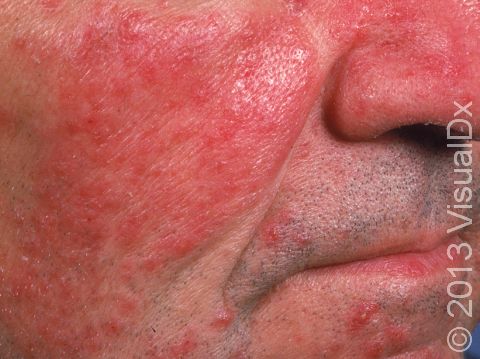
This image displays severe rosacea.
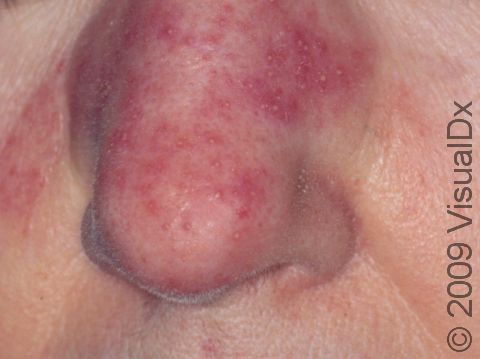
Rosacea is often characterized by small pimple-like pus-filled lesions (pustules) and red bumps.
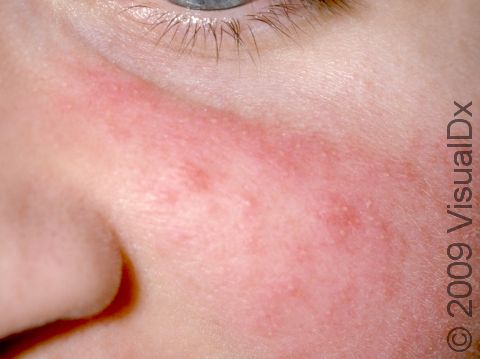
This image displays small pink bumps and pus-filled lesions on the cheeks typical of rosacea.
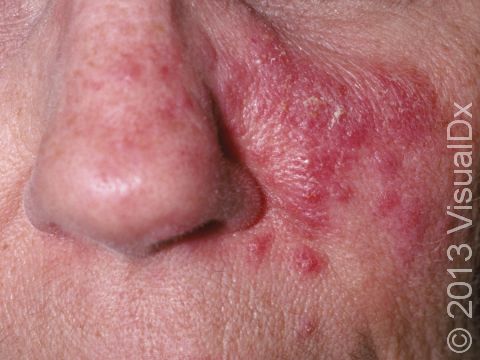
This image displays a bump-like form (one of many) of rosacea.
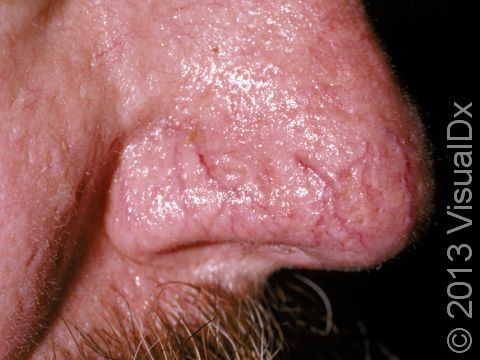
This image displays the dilated blood vessels that are typically seen in rosacea.
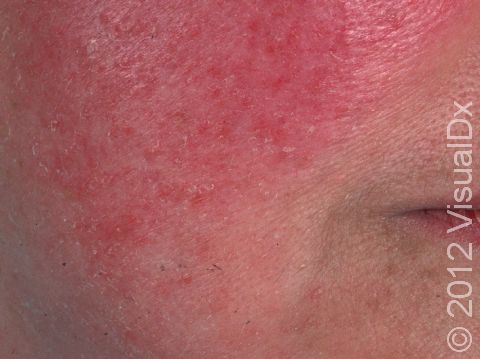
This image displays broad areas of redness on the cheeks typical of rosacea.
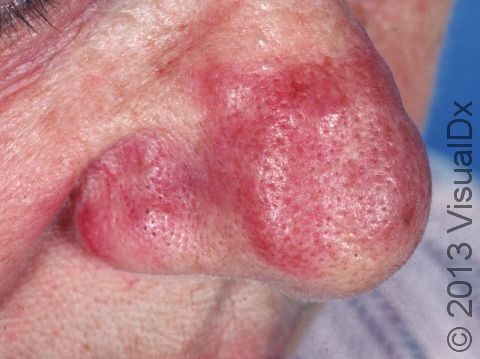
This image displays the redness and thickening of the nose typical of rosacea.
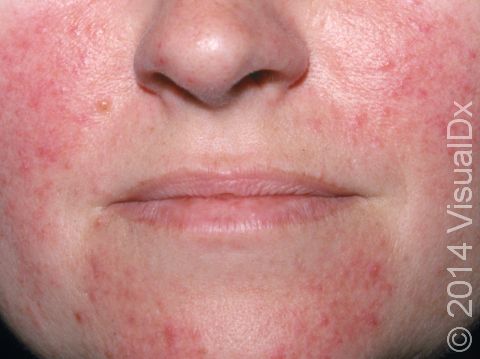
Rosacea can cause redness and dilated blood vessels, as displayed in this image.
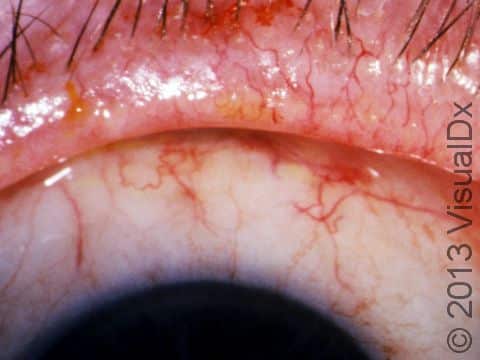
This image displays eyelids with small crusts caused by rosacea.
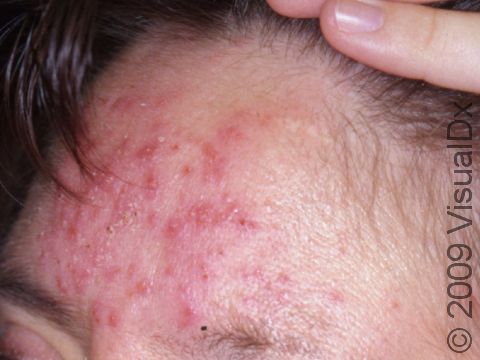
The central forehead is often affected in severe rosacea with multiple pimple-like bumps.
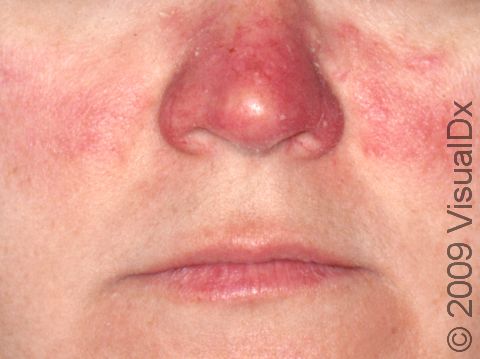
The nose can be bright red in people with rosacea.
Rosacea
Rosacea, sometimes called adult acne, is a chronic inflammation of the face of unknown cause and without a permanent cure. Four different types of rosacea have been described:
- “Red face” rosacea with face flushing (erythrotelangiectatic rosacea), which can progress to a persistent redness of the nose or central face
- Acne-like bumps and/or pus-filled lesions (papulopustular rosacea), with or without a red face and flushing
- Bumpy, thickened skin of the nose (rhinophyma), with slow enlargement of oil glands and sometimes skin thickening of other areas of the face, usually in men
- Eye problems (ocular rosacea), which may occur before skin changes, in which a burning or gritty feeling may be present, as well as reddening of the eyes and eyelids
Who's At Risk?
Adults aged between 30 and 60 are most often affected by rosacea, and it most commonly affects women. In most people, rosacea comes and goes periodically; in some, it gets worse with time.
Rosacea flares can be triggered by increased blood flow to the face, such as from sunlight, hot drinks, spicy foods, alcohol, exercise, hot baths or saunas, temperature extremes, and emotional stress. Prolonged use of cortisone creams on the face can also lead to rosacea.
Signs & Symptoms
- Persistent or recurrent redness of the central face, sometimes with swelling
- In darker skin colors, redness may have a more violet hue, and affected skin may appear darker or dusky brown
- Papules (small, raised bumps) or pustules (small pus-filled bumps) on the face, without blackheads and whiteheads
- A red, bulb-shaped nose
- Small telangiectasia (flat red, purple, or blue blood vessels, also called spider veins) on the central face
- A burning or gritty feeling in the eyes, with or without red eyelids
Rosacea can be considered:
- Mild – occasional blushing and/or only rare lesions
- Moderate – frequent blushing, persistent face redness, and/or a few lesions almost all the time
- Severe – includes some or all the following:
- Lots of papules and pustules all the time
- Red, uncomfortable eyes all the time
- A large, bulbous nose
- Several telangiectasia on the face
Self-Care Guidelines
Identify and minimize any exposure that triggers episodes of rosacea:
- Use a broad-spectrum sunscreen with a sun protection factor (SPF) of 30 or more on your face.
- Avoid your triggers, which may include drinking hot liquids and alcohol, eating spicy foods, and excessive heat exposure.
- Protect your face in cold weather with a scarf or mask.
- Avoid facial products with alcohol or other skin irritants (such as astringents, toners, sorbic acid, menthol, and camphor), and use mild cleansers for the face.
- Green- or yellow-tinted makeup can help hide redness.
- Cool compresses and gel masks may be of some benefit.
- Some over-the-counter products can help to minimize redness, eg, the Aveeno Ultra-Calming range of products and the Eucerin Redness Relief line.
- Eye rosacea can be treated with warm water compresses 2-4 times a day followed by gentle cleaning of the eyelid rims with baby shampoo (eg, Johnson’s Baby Shampoo) on a cotton swab. Artificial tears can be used if your eyes feel gritty or uncomfortable.
Treatments
- Topical washes, creams, or lotions with metronidazole (MetroCream), clindamycin (Cleocin T), erythromycin (AkneMycin), prescription-strength sulfur (Liquimat, Sulpho-Lac), sodium sulfacetamide (Sulfacet R), azelaic acid (Azelex, Finacea), or ivermectin (Soolantra).
- A special formulation (encapsulated) of benzoyl peroxide (Epsolay) (generic, “regular” benzoyl peroxide is too irritating).
- If these are only partially helpful, oral antibiotics can be very effective (tetracycline [Sumycin, Actisite], erythromycin, ampicillin [Ampi], or metronidazole [Flagyl]).
- Brimonidine topical gel (Mirvaso) or oxymetazoline cream (Rhofade) can help reduce facial redness.
- Isotretinoin (Amnesteem, Claravis) is used for very severe cases of rosacea and has significant side effects.
- Surgical treatment with lasers or electrocautery can reduce the visibility of blood vessels and the extra nose tissue in rhinophyma.
Visit Urgency
If your rosacea causes changes in your appearance or symptoms that interfere with your daily life, you should seek medical care. If you have severe, persistent flushing, there are other possible causes of flushing requiring laboratory tests; see a medical professional. See an ophthalmologist for persistent or worsening eye symptoms.
References
Bolognia J, Schaffer JV, Cerroni L. Dermatology. 4th ed. Philadelphia, PA: Elsevier; 2018.
James WD, Elston D, Treat JR, Rosenbach MA. Andrew’s Diseases of the Skin. 13th ed. Philadelphia, PA: Elsevier; 2019.
Kang S, Amagai M, Bruckner AL, et al. Fitzpatrick’s Dermatology. 9th ed. New York, NY: McGraw-Hill Education; 2019.
Disease Groups:
Acne and Acne-Like Conditions
Last modified on September 23rd, 2024 at 1:34 pm
Related Articles
Not sure what to look for?
Try our new Rash and Skin Condition Finder