
Frostbite, First Aid
Frostbite is freezing of the skin that occurs due to exposure to cold temperatures. Frostbite often starts out with mild symptoms. It can progress and become quite severe and even limb-threatening.
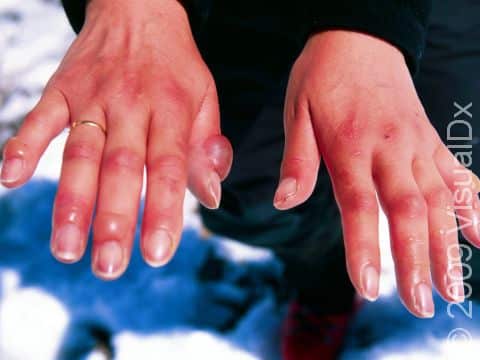
Frostbite is considered mild when the affected skin is either red or darker than the surrounding skin and painful, or when skin is white and numb. Severe frostbite includes blistering skin, hard skin (due to frozen bone and blood vessels), and possibly gangrene (tissue that has died and turned black after blood vessels became frozen).
Frostbite is often associated with hypothermia, which involves symptoms such as severe shivering, slurred speech, confusion, and drowsiness.
Who's At Risk?
Frostbite occurs most often to those exposed to extreme cold, so people who participate in cold-weather outdoor activities or who live in or travel to cold climates are most at risk. Frostbite can also occur in people exposed to high winds, people who have poor circulation, people in cramped positions who have tight-fitting clothing or boots, and people suffering from fatigue. Additionally, certain diseases and medications, alcohol consumption, and smoking increase the risk of frostbite.
Signs & Symptoms
Frostbite most often occurs on skin exposed to cold, such as on the face and ears, and on extremities, such as the fingers and toes.
Skin that is mildly frostbitten may look either reddened or white. In darker skin colors, the redness may be harder to see, or affected skin may appear darker than the surrounding skin. When frostbite becomes more severe, the skin may appear blistered and possibly blackened. In severe frostbite, the skin typically feels hard to the touch.
Self-Care Guidelines
First Aid Guide
In the case of mild frostbite, the following measures should be taken:
- Move the person to a warm location.
- Remove clothing from the affected area.
- Rewarm the affected area until sensation in the skin has returned and the skin is soft (for at least 30 minutes). Rewarming of frostbitten skin is typically accompanied by pain, swelling, and color change.
- To rewarm an extremity, place the limb in a bath of warm but not hot water. Continue to circulate and refresh the warm water.
- To rewarm an area that cannot be soaked in a bath of water, apply a warm compress. (Ensure that the compress is warm but not hot.)
- Apply a clean (sterile if possible), dry dressing to the affected area.
- Re-cover the affected area with dry clothing to keep it warm.
- Get medical help.
Note:
- Frostbitten areas, once thawed, should be moved as little as possible.
- Do not massage the affected area to attempt to rewarm it.
- Avoid disturbing any blisters or skin that has become gangrenous.
- Do not use direct heat (eg, hair dryers, heating pads) to rewarm the affected area.
- If there is potential for refreezing of an area, do not attempt to thaw it, as thawing followed by refreezing can cause even more extensive damage to the area.
When a person has both frostbite and hypothermia, contact emergency medical services, and give first aid for hypothermia followed by first aid for the frostbite.
First aid measures for hypothermia are:
- Check the person’s ABCs: open their airway, and check their breathing and circulation.
- Move the person to a warmer location, and replace any wet or constricting clothes with loose, dry clothing.
- To rewarm the person:
- Cover them completely with foil or a space blanket, or use your own body heat to help warm them.
- Use warm compresses on the neck, chest, and groin.
- Give warm, sweet fluids. (Any fluids given should be nonalcoholic, as alcohol interferes with the blood’s circulation.)
Treatments
The medical professional will first work to rewarm the affected area(s) while managing the pain associated with rewarming frostbitten skin. The area should be dressed and elevated to protect the sensitive skin from further damage.
If the area becomes infected, an antibiotic will be given, and surgical management may be needed.
Follow-up care with medical professionals, such as a physician, physical therapist, and rehabilitation therapist, is very important and may be needed long term.
Visit Urgency
Seek medical care for any form of frostbite. For mild frostbite, perform the above self-care measures and then obtain medical help. For severe frostbite, call emergency medical services.
Trusted Links
Last modified on August 9th, 2024 at 12:05 pm
Not sure what to look for?
Try our new Rash and Skin Condition Finder