Results for: Adult :: Female :: Face
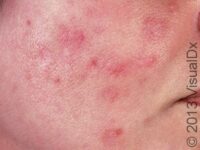
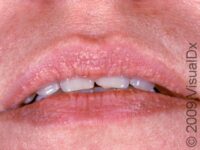
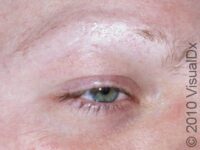
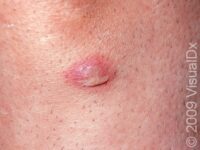
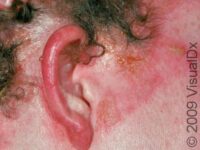
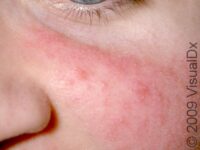
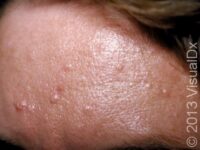
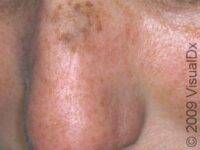
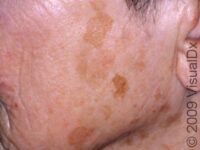
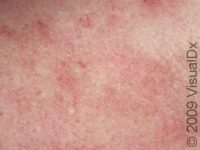
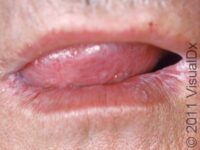
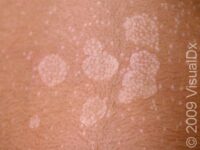
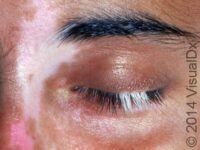
Click the pictures below for information about the conditions that can affect the face in adults. A very common problem affecting the skin on the face is acne. While acne is less common in adults than teens, younger adults still commonly suffer from acne vulgaris similar to adolescents. As people age, rosacea is a more common acne-like condition. Rashes, in general, are very common on the face. Often, these are the result of using cosmetics or other products that cause dermatides such as allergic contact dermatitis or irritant contact dermatitis. Some diseases, such as lupus, have distinct facial rashes. People of African and Asian decent commonly develop small, dark, harmless lesions on their faces called dermatosis papulosa nigra. In general, the face is exposed to a great deal of sunlight, which over the course of a lifetime can lead to many types of skin damage, including the development of skin cancer.
Abscess
An abscess is an infection characterized by a collection of pus underneath a portion of the skin. Bacteria commonly causing abscesses are
Staphylococcus aureus and
Streptococcus. These bacteria…
Acne (Acne Vulgaris)
Acne, also known as acne vulgaris, is thought to be caused by multiple factors. Overproduction of a normal oil on the skin, called sebum, increases under the influence of hormones. This, coupled with insufficient…
Acne Excoriée
Acne excoriée, also known as "picker's acne," results when acne lesions are compulsively squeezed and scratched, resulting in scabs and scars. It is seen most commonly in adolescent girls and has been…
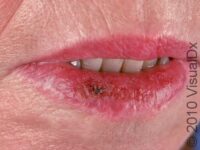
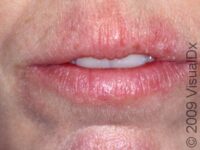
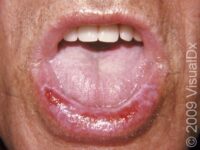
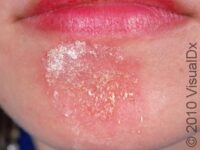
Actinic Cheilitis
Actinic cheilitis, sometimes known as "farmer's lip" or "sailor's lip," is a precancerous condition related to cumulative lifetime sun exposure. The lower lip is most often affected. Individuals with actinic…
Actinic Keratosis (Solar Keratosis)
Actinic keratoses, also known as solar keratoses, are small rough or scaly areas of skin due to damage from sun exposure. Some actinic keratoses can turn into squamous cell skin cancer, so it is important to perform…
Allergic Contact Dermatitis
Allergic contact dermatitis is a delayed hypersensitivity reaction (the reaction to the allergen occurs 48–72 hours after exposure). The most common allergens causing allergic contact dermatitis…
Angular Cheilitis
Angular cheilitis (perlèche) is a chronic inflammatory condition of the corners of the mouth. Usually associated with a fungal (
Candidal) or bacterial (
Staphylococcal) infection, those…
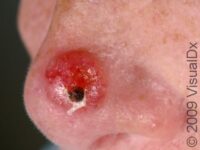
Basal Cell Carcinoma (BCC)
Basal cell carcinoma (BCC), also known as basal cell epithelioma, is the most common form of skin cancer. Basal cell carcinoma usually occurs on sun-damaged skin, especially in light-skinned individuals with a…
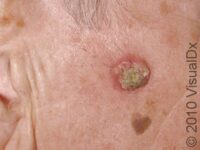
Chapped Lips (Cheilitis)
Chapped lips (cheilitis) are lips that appear dry, scaly, and may have one or more small cracks (fissures). Often, the lips are sensitive, and there may or may not be redness (erythema) and swelling (edema) present.
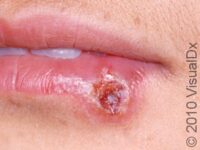
Cold Sores (Orofacial Herpes)
Herpes simplex infection of the mouth and face, known as orofacial herpes simplex, herpes labialis, cold sores, or fever blisters, is a common, recurrent skin condition associated with infection by the herpes…
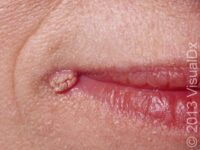
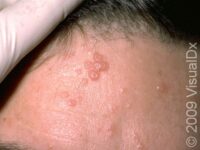
Common Wart
Warts are growths of the skin and mucous membranes (the mouth or genitals) that are caused by over 100 types of the human papillomavirus (HPV). Common warts are usually found on areas of the body prone to trauma, such…
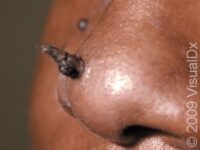
Cutaneous Horn
A cutaneous horn, also known as cornu cutaneum, refers to a specific appearance of a skin lesion in which a cone-shaped protuberance arises on the skin caused by overgrowth of the most superficial layer of skin…
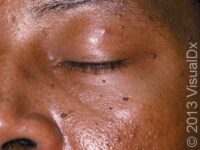
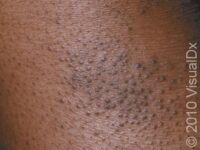
Dermatosis Papulosa Nigra
Dermatosis papulosa nigra is a harmless condition commonly affecting the faces of black and sometimes Asian adults. The cause of dermatosis papulosa nigra is unknown, although about half of people affected have a…
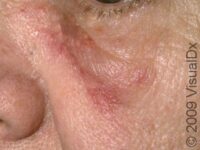
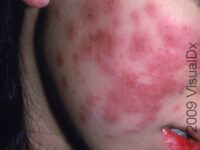
Discoid Lupus Erythematosus
Lupus is a disease in which your body's self-protection mechanism (immune system) attacks your own body rather than a foreign invader. The cause of lupus is unknown, and the disease usually takes one of two forms:…
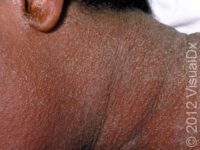
Eczema (Atopic Dermatitis)
Eczema (atopic dermatitis) is a disorder is associated with dry skin, which begins with intense itching that is aggravated by scratching. The exact cause of eczema is unknown, and there is no known cure.
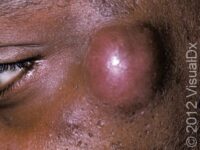
Epidermoid Cyst
Epidermoid cysts, sometimes known as sebaceous cysts, contain a soft "cheesy" material composed of keratin, a protein component of skin, hair, and nails. Epidermoid cysts form when the top layer of skin…
Flat Wart
Warts are growths of the skin and mucous membranes (the mouth or genitals) that are caused by over 100 types of the human papillomavirus (HPV). The virus causes thickening of the top skin layer. Flat warts tend to stay…
Folliculitis
Folliculitis is a skin condition caused by an inflammation of one or more hair follicles in a limited area. It typically occurs in areas of irritation, such as sites of shaving, skin friction, or rubbing from…
Fordyce Spots
Fordyce spots are normal large, superficial sebaceous (oil-producing) glands seen on the moist tissue that lines some organs and body cavities (mucosal surfaces). The "spots" are asymptomatic and can be found on…
Impetigo
Impetigo is a common and contagious bacterial skin infection that is usually a minor problem, but sometimes complications may occur that require treatment. Complications related to impetigo can include deeper…
Irritant Contact Dermatitis
Irritant contact dermatitis is an inflammatory rash caused by direct chemical injury to the skin. Unlike allergic contact dermatitis, which appears 48–72 hours after exposure to an allergen, the symptoms…
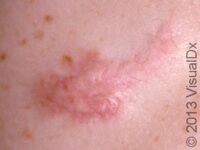
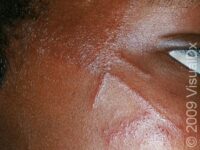
Keloid
Keloids are dense, thick nodules, typically found at areas of previously injured skin (burns, lacerations), or they may arise spontaneously on normal skin. They may be single or multiple.
Keratoacanthoma
Keratoacanthoma (KA) is a rapidly growing skin cancer usually appearing as a volcano-like bump on the sun-exposed skin of middle-aged and elderly individuals. Many scientists consider keratoacanthoma to be a…
Keratosis Pilaris
Keratosis pilaris is a very common benign skin condition appearing as small, whitish bumps on the upper arms and thighs, especially of children and young adults. Individual lesions of keratosis pilaris arise when…
Lichen Planus
Lichen planus (LP) is a disease of the skin and, less often, the scalp, fingernails, toenails, and/or inside the mouth or genitalia (mucous membranes). Lichen planus can resolve on its own without treatment or be…
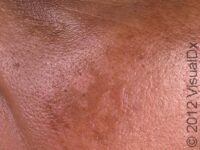
Melasma
Melasma is a non-cancerous (benign) disorder of unknown cause that causes dark (hyperpigmented) patches, primarily on the face. The condition is marked by brown patches that worsen in response to increases of the…
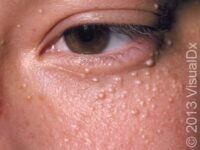
Milia
Milia are a common skin finding in people of all ages. They are formed when dead skin does not slough off normally but instead remains trapped in a tiny, round pocket on the surface of the skin. An individual milium (the…
Molluscum Contagiosum
Molluscum is a common painless and usually harmless viral infection of the skin. Although it is painless and usually goes away after several months, some cases can last a few years.
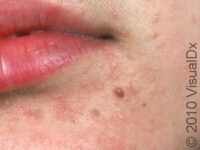
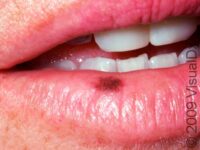
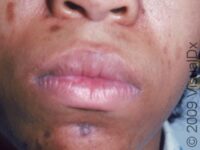
Oral Melanotic Macule
Oral melanotic macule is a non-cancerous (benign), dark spot found on the lips or inside the mouth. An oral melanotic macule found on the lip is sometimes called a labial melanotic macule.
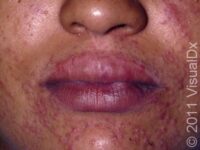
Perioral Dermatitis
Perioral dermatitis is an acne-like condition of unknown cause. Some possible causes are the use of topical corticosteroid creams, cosmetic products, oral contraceptives, fluoride and anti-tartar…
Poison Ivy, Oak, and Sumac
Poison ivy, poison oak, or poison sumac dermatides are a reaction to the rhus antigen, which is found in poison ivy, poison oak, and poison sumac plants.
Post-Inflammatory Hyperpigmentation
Post-inflammatory hyperpigmentation is darkening of the skin in an area of prior injury or skin disorder from increased pigment (melanin) left from the healing process. Sometimes the darkening may also be due to…
Post-Inflammatory Hypopigmentation
Post-inflammatory hypopigmentation is a loss of skin color (pigmentation) after your skin heals from an injury. The pigment-producing cells (melanocytes) are damaged or destroyed in the healing process.
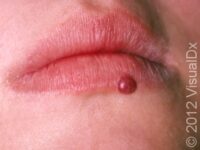
Pyogenic Granuloma
Pyogenic granuloma is a common, benign growth that often appears as a rapidly growing, bleeding bump on the skin or inside the mouth. It is composed of blood vessels and may occur at the site of minor injury.
Ringworm, Facial (Tinea Faciale)
Tinea infections are commonly called ringworm because some infections form a ring-like pattern on affected areas of the body. Facial ringworm (tinea faciale), also known as tinea faciei or ringworm of the face, is…
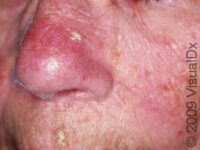
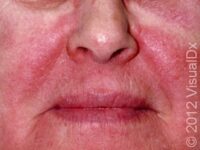
Rosacea
Rosacea, sometimes called adult acne, is a chronic inflammation of the face of unknown cause and without a permanent cure.
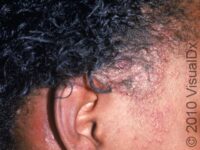
Seborrheic Dermatitis
Seborrheic dermatitis, also known as seborrhea, is a common non-contagious condition of skin areas rich in oil glands (the face, scalp, and upper trunk). Seborrheic dermatitis is marked by flaking…
Seborrheic Keratosis
Seborrheic keratoses are common benign growths of unknown cause seen in adults due to a thickening of an area of the top skin layer.
Solar Lentigo
A solar lentigo (plural, solar lentigines), also known as a sun-induced freckle or senile lentigo, is a dark (hyperpigmented) lesion caused by natural or artificial ultraviolet (UV) light. Solar lentigines may…
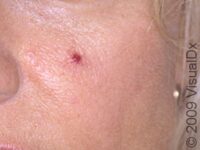
Spider Angioma
A spider angioma is a grouping of small blood vessels at the skin surface. The pattern sometimes resembles the threads of a spider's web.
Squamous Cell Carcinoma (SCC)
Squamous cell carcinoma (SCC) is the second most common form of skin cancer. Squamous cell carcinoma usually occurs on sun-damaged skin, especially in light-skinned individuals with a long history of chronic sun…
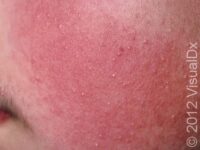
Syringoma
Syringoma is a non-cancerous (benign) bump usually found on the upper cheeks and lower eyelids of young adults. Syringomas are completely harmless and are caused by the overgrowth of cells from sweat glands…
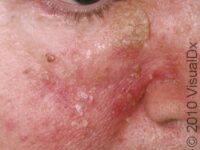
Systemic Lupus Erythematosus
Systemic lupus erythematosus (SLE), also called lupus, is a chronic inflammatory disease that can affect almost any part of the body, especially the skin, joints, kidneys, heart, lungs, bones, blood, or brain.…
Telangiectasia
Telangiectasias are widely open (dilated) blood vessels in the outer layer of the skin. When seen on the legs, they are often called spider veins.
Thrush (Oral Candidiasis)
Thrush (oral candidiasis), also known as oral moniliasis, is a yeast infection of the mouth or throat (the oral cavity). The yeast that most commonly causes oral candidiasis is
Candida albicans.
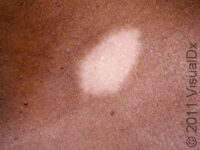
Vitiligo
Vitiligo is a disease where the immune system turns against itself (autoimmune disease) where immune cells of the body attack the color-producing (pigment-producing) cells to cause white patches on the skin…
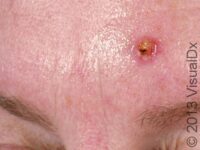
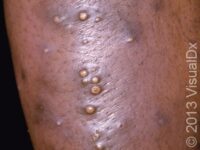
Boils (Furunculosis)
Boils (furuncles) are painful pus-filled bumps on the skin resulting from the deep infection of a hair follicle. The infection is usually caused by a type of bacteria called
Staphylococcus aureus (staph).
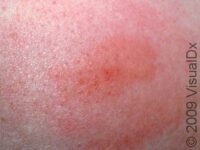
Bug Bite or Sting
Bites or stings from insects (arthropods) are very common. Most reactions are mild and result due to an allergic reaction to either the insect or the toxins injected with the bite or sting.
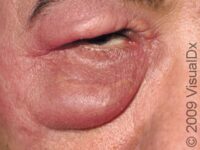
Cellulitis
Cellulitis is an infection of the skin and is most often caused by the bacteria
Streptococcus or
Staphylococcus. These bacteria are able to enter the skin through small cracks (fissures), causing…
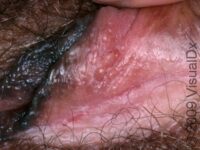
Genital Wart (Condyloma Acuminatum)
Genital warts (condyloma acuminata) are caused by the human papillomavirus (HPV), which has over 100 different strains. Subtypes number 6 and 11 cause 97% of genital warts and are considered…
Hives (Urticaria)
Hives (urticaria), also known as welts, is a common skin condition with an itchy rash of pink to red bumps that appear and disappear anywhere on the body. An individual lesion of hives typically lasts a few hours…
Lentigo Simplex
Lentigo simplex is a type of color-containing (pigmented) lesion not caused by sun exposure, which looks like the freckle-like condition (lentigo) caused by sun exposure (solar lentigo). In both conditions, an…
Melanoma
Skin cancer is the most common cancer in the United Sates, and it is the sixth most common cause of cancer death in the United States. Melanoma is the least common of the skin cancers (the other types are squamous…
Mole, Atypical (Atypical Nevus)
Atypical moles (atypical nevi) or dysplastic moles (dysplastic nevi), are caused by collections of the color-producing (pigment-producing) cells of the skin (melanocytes) in which the cells grow in an abnormal…
Primary Syphilis
Primary syphilis is a disease caused by a corkscrew-shaped bacterium (a spirochete) called
Treponema pallidum. It causes disease when it penetrates broken skin of the genitals or the mucous membranes of…
Shingles (Zoster)
Shingles, also known as herpes zoster, is a painful rash caused by the varicella-zoster virus, the same virus that causes chickenpox. After a person recovers from chickenpox, the virus remains sleeping…
Sunburn
Sunburn is caused by the skin's reaction to ultraviolet light exposure. It appears as reddening and tenderness of the skin and usually occurs between 12 and 24 hours after the exposure.
Yeast Infection (Candidiasis)
Candidiasis, commonly known as a yeast infection, is an infection with the common yeast (or fungus) organism,
Candida albicans, which is commonly found in the environment. Sometimes this yeast lives in…